
FREE DELIVERY FROM $138*
Check to see if we deliver to you.
FREE DELIVERY FROM $138*
Check to see if we deliver to you.


Navigating your NDIS plan can feel like wading through a sea of acronyms, and when it comes to food, knowing which supports apply isn't always obvious. Capacity building NDIS supports are one of the most powerful (and underutilised) parts of your plan, designed to help you build long-term independence, not just get through the day. When it comes to meal planning, cooking skills, and eating well with a disability, these supports can genuinely change your day-to-day life. In this guide, you'll find a clear breakdown of how capacity building works, which funding categories cover nutrition and meals, and how services like Nourish'd complement your journey towards greater food independence.

Your NDIS plan can include up to four support budgets:
Most participants will have the first three budgets in their plan, and some may also have a separate recurring budget.
According to the NDIS, Capacity Building Supports are specifically designed to help you build your independence and skills so you can pursue your goals, now and into the future.
The key difference between Capacity Building and Core Supports is the purpose:
The NDIS groups Capacity Building Supports into nine categories, each funding different types of supports and services. Your plan may include funding in one or more of these categories depending on your individual goals and needs.
One important note: Unlike your Core Supports budget, Capacity Building funding generally cannot be moved between categories. Funding within each Capacity Building category must be used for that specific purpose, which makes understanding your categories especially important.
While all nine Capacity Building categories serve important purposes, two in particular are most relevant when it comes to food, nutrition, and independent meal planning.
This is a common Capacity Building category for nutrition-related supports. Improved Daily Living funds therapy, training and assessments that help participants develop practical skills for everyday independence, including:
For meal planning specifically, this category can fund:
The NDIS support line item for dietitian services under this category is 15_062_0128_3_3. According to Your Nutrition, this item covers Improved Daily Living dietitian supports for participants aged 7 and over.
This category funds supports that are directly related to managing the impact of your disability on your health. Leap in! explains that Health and Wellbeing supports might include a:
All focused on building your physical capacity and wellbeing.
The preferred NDIS line item for dietitian services under this category is 12_025_0128_3_3 (Improved Health and Wellbeing, All Ages). Feed Your Future Dietetics notes that this is the preferred category for funding dietetic services, with Improved Daily Living as the secondary option if this item is unavailable or exhausted.
Working with an NDIS-funded dietitian is one of the most effective ways to use your Capacity Building supports when it comes to nutrition. Dietitians Australia highlights that people with disability may have physical, intellectual, sensory or psychiatric impairments that lead to unique food and nutrition needs, on top of general nutritional requirements for growth, repair, immunity, activity and mental health.
An accredited practising dietitian can help you with:
Dietitians can also help participants select the right meal delivery service to match their dietary needs, and support a smooth transition from delivered meals to self-prepared meals when the participant is ready. That's the essence of capacity building in action.

Here's where things get particularly interesting for NDIS participants working on meal independence. Ready-made meal delivery services play a complementary role alongside your capacity building supports, they're not in competition with each other.
As the NDIS guidelines on nutrition supports explain, while participants work on building their capacity (for example, learning to cook with an occupational therapist), ready-made meals can:
Think of meal delivery as a bridge that helps you maintain excellent nutrition while you're building skills for the longer term.
The NDIS funds the preparation and delivery costs of ready-made meals as a Core Support (not Capacity Building), while you pay a co-payment for the food itself. Our knowledge base article on co-payments explains exactly how this split works for Nourish'd participants, making it easy to understand what your plan covers and what you'll pay out of pocket.
If you're unsure whether meal preparation and delivery is already included in your plan, check out our guide on how to confirm this before your next planning meeting.
Nourish'd is a 100% gluten-free, chef-prepared meal delivery service, and as a registered NDIS provider, we work with self-managed, plan-managed, and agency-managed participants across:
Every meal is Coeliac Australia endorsed, preservative-free, and crafted by our chefs and in-house dietitian to ensure genuine nutritional balance. For NDIS participants managing coeliac disease or gluten intolerance alongside their disability, this removes an enormous layer of stress from mealtime planning.
Here are some Nourish'd meals that are particularly popular with NDIS participants:


.jpg)
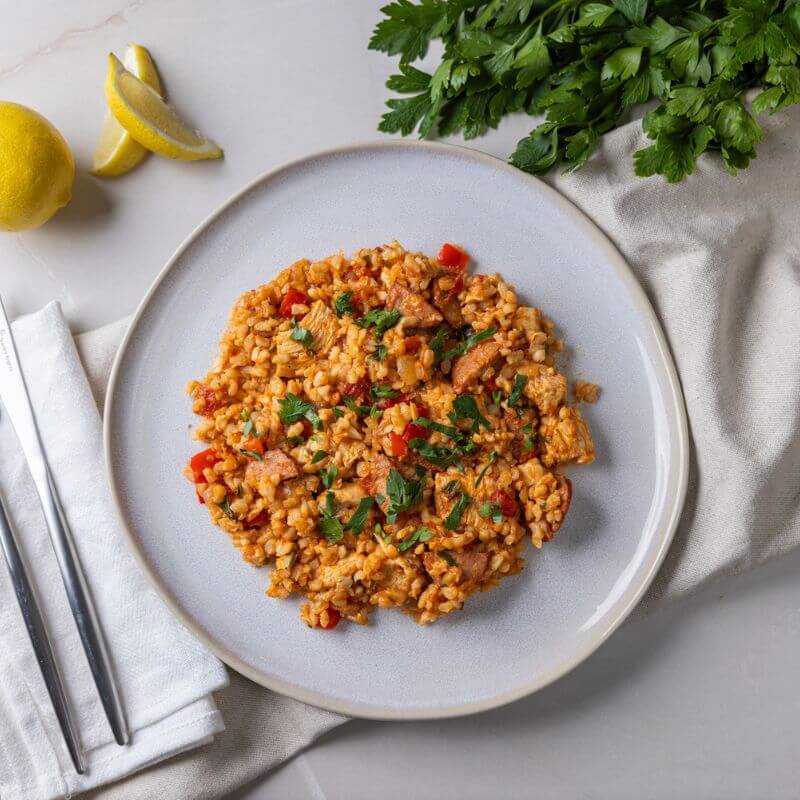
All Nourish'd meals arrive chilled and ready to heat in minutes, making them an excellent support tool for participants building their meal planning independence. Explore our full gluten-free meal delivery range or visit our NDIS meal provider page to find out how to get started.
If your current plan doesn't include nutrition-related Capacity Building supports, it's worth having a conversation with your NDIS planner, Local Area Coordinator (LAC), or support coordinator. Here's how to approach it:
If you're new to the NDIS and wondering how to sign up with Nourish'd as your meal provider, our step-by-step guide walks you through the process. Support coordinators can also reference our dedicated coordinator guide for a step-by-step overview.

Whether you're working with a dietitian, an occupational therapist, or building skills on your own, here are some practical strategies that make independent meal planning more achievable:
Rather than planning individual meals from scratch each day, start with a simple weekly framework:
The Australian Dietary Guidelines recommend a variety of foods from each of the five food groups daily, a framework you can use as a starting template with your dietitian.
High-quality ready-made meals aren't just convenient, they're educational. When you eat a well-balanced, chef-prepared meal, you get a real-world example of:
This is particularly useful when you're building food literacy skills with your dietitian or OT.
If your disability affects your energy levels, stamina, or dexterity, breaking meal preparation into smaller stages across the week is a practical strategy. For example, wash and chop vegetables on one day, cook proteins on another. Your occupational therapist can help you adapt this approach to your specific abilities.
A consistent shopping list is one of the most effective tools for independent meal planning. Work with your dietitian or support worker to create a personalised list based on your nutritional needs, preferences, and budget. Nutrition for Living notes that NDIS dietitians regularly provide personalised shopping lists and supermarket tour education to help participants build real-world food literacy skills.
Capacity Building in the NDIS refers to a category of supports designed to help you develop skills, confidence, and independence over time. Unlike Core Supports which fund day-to-day assistance, Capacity Building funds therapy, training, and other services that build your long-term ability to manage everyday tasks, including meal planning and preparation.
Yes. NDIS participants can access dietitian services under the Capacity Building category, specifically through Improved Health and Wellbeing (line item 12_025_0128_3_3) or Improved Daily Living (line item 15_062_0128_3_3). Active Ability explains that the support must relate to your disability goals, usually regarding functional capacity, participation, or self-management.
Yes, Nourish'd is a registered NDIS provider. Meal preparation and delivery costs are funded through your Core Supports budget (not Capacity Building), with you paying a co-payment for the food itself. Learn how to get started with Nourish'd as an NDIS participant, whether you're self-managed, plan-managed, or agency-managed.
In most cases, you won’t need a formal quote to use Nourish’d with your NDIS funding, because the NDIS meal preparation and delivery support item doesn’t require one. However, some plan managers or support coordinators may still ask for a quote as part of their own processes. Our knowledge base article on NDIS quotes explains when a quote might still be needed and how we can provide one if required.
Meal preparation and delivery for NDIS participants falls under Core Supports, using support item code 01_023_0120_1_1. This covers the cost of preparation and delivery, not the food itself, which is a participant co-payment. If you're unsure whether this is included in your plan, check our guide here.
Absolutely. Improved Daily Living funding can cover occupational therapy sessions focused on cooking skills, kitchen safety, and meal preparation. Mambourin notes that this type of practical skills training might include learning to plan meals, shop for ingredients, follow recipes, and cook safely, all of which build lasting independence.
Capacity building NDIS supports are about more than ticking boxes in your plan, they're about creating a life where you feel capable, nourished, and in control. Whether that means working with a dietitian to master your nutritional needs, building cooking confidence with an OT, or using quality ready-made meals to reduce daily stress, every step towards greater food independence matters. Nourish'd is here to complement your journey, not complicate it. Our gluten-free, chef-prepared meals are designed to make excellent nutrition effortless, giving you more time and energy to focus on the skills and goals that matter most to you. Ready to get started? Visit our NDIS page and take the first step.


No past conversations yet.